Around 1,900 children are diagnosed with cancer each year in the UK
Learning to cope with childhood cancer
A diagnosis of cancer in a child shatters more than physical health – it upends childhood itself. Hospitals, with their endless appointments, unfamiliar smells, clinical routines and sometimes long stays in isolation, replace playgrounds, school trips and family routines in a heartbeat. For children, this can be deeply confusing, frightening and lonely. The treatments – chemotherapy, surgeries, transfusions – often lead to fatigue, sickness, loss of energy, and vulnerability. They may spend long hours in hospital beds, away from friends and siblings; they may lose hair or feel their bodies growing strange.
For a child, who should be learning, playing, growing – treated like a child – cancer treatment can feel like being thrust into an overwhelming adult world where everything is uncertain. Fear, sadness, frustration, boredom and loss can become daily companions.
But amid that darkness, small gestures of kindness – reminders that someone cares, small comforts, distractions – can make a huge difference. That’s where the simple, but powerful idea behind the Cancer Support UK “Kids’ Kit” comes in.
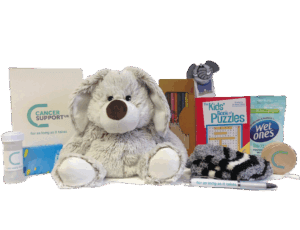
A Kids’ Kit contains numerous items to comfort, distract, soothe and entertain poorly children being treated for cancer
What is a Kids’ Kit and why it matters
The Kids’ Kit is a small collection of items designed to bring comfort, distraction and a sense of normalcy to children undergoing cancer treatment. The kit typically contains:
- A cuddly Warmies® bunny – this is much more than just a soft toy. The bunny is a sensory toy, which is specially weighted to help provide comforting reassurance. It can also be heated in a microwave.
- cosy socks, to keep little toes warm when treatment leaves children feeling cold.
- small toys and games – from yo-yos to bubbles – that are easy to carry, don’t need charging and can provide a moment’s joy even in a hospital corridor or in isolation.
- a colouring set and notebook plus pen, giving children a creative, safe outlet – to draw, to doodle, to journal their feelings – or simply to pass the time between treatments.
- practical items such as antibacterial wipes and tissues – acknowledging the reality of hospital life and making daily routines a little easier.
In short, a Kids’ Kit is more than just “gifts” – it is a thoughtful bundle designed to meet a sick child’s needs: comfort, distraction, practical support, and normal childhood experiences wherever possible.

The arrival of a Kid’s Kit made such a difference to Samuel, restoring his smile and giving him a much-needed boost. He loved the games inside the Kit, which mean he can have fun when he’s in hospital.
Real stories: the emotional impact of kindness and care
Take the story of four-year-old Samuel. Diagnosed with a rare and serious neuroblastoma, Samuel faced a gruelling regime of chemotherapy and a possible stem-cell transplant. Hospital stays — including long stretches in protective isolation — meant he was cut off from much of the outside world.
When his Kids’ Kit arrived, his mum Heather wrote that “Samuel loved receiving something that was for just him alone.”
For a child whose life has been taken over by hospital visits, tests and treatment plans, getting a little bag of treats and comforts can mean a rediscovery of childhood – even if only for a short moment.

Lucas adores his yellow thermal Minion socks, which came are part of his Kids’ Kit from Cancer Support UK
Making life “a little bit brighter” in the hardest times
For Lucas – diagnosed at just three – the hospital journey meant years of intensive treatment, involving a whirlwind of hospital stays, treatment schedules and emotional ups and downs.
But the arrival of a Kids’ Kit during his hospital stay changed something. His mum Sian says “Lucas loved receiving the kit – it really cheered him up (and us too!). The contents were so thoughtful, with lots of things he could use in hospital stays. It meant so much to know that someone cared enough to try and make Lucas’ life a little bit brighter in the hardest times.”
Small toys, a cuddly bear, a sense of normalcy – for children like Lucas, these can be emotional lifelines, giving both child and family a moment of relief, hope and comfort.

A Warmies cuddly dog from a Cancer Support UK Kids’ Kit is now 11-year old Ivy’s best friend. Hazel goes everywhere with Ivy, including to hospital appointments
Distraction, comfort and a sense of being seen
Eleven-year-old Ivy, treated for a brain tumour, said that the sensory soft toy from her Kit – a Warmies® dog she calls “Hazel” – accompanies her to hospital every week. The toy has become a comforting presence during chemotherapy sessions, offering warmth, familiarity and reassurance.
“Before I got the support kit, I was feeling very fed up… when I received it, I just was very happy,” Ivy said.
In a world dominated by treatments, tests and uncertainty, that small smile, that moment of joy – it isn’t trivial. It matters.
Why hospitals and treatments can take such an emotional toll on children
- Loss of normality: cancer treatment often strips away school, friends, playgrounds, birthday parties – and with them, the routines that anchor childhood.
- Isolation and loneliness: extended hospital stays, visits by one parent only, separation from siblings or peers, limited social contact.
- Fear, uncertainty and loss of control: children might not understand why their body is failing them, why they must endure painful or invasive treatments. Their sense of safety is shaken.
- Physical discomfort and side-effects: sickness, fatigue, pain, cold (like hands or feet), discomfort after chemo or procedures – all contribute to emotional distress.
- Boredom and anxiety: endless hours in a hospital bed with nothing to do, or the tedious waiting between appointments, can build fear, restlessness or sadness.
In combination, these factors can profoundly affect a child’s emotional wellbeing and ripple out to affect parents, siblings, and the wider family.
What families can do to help ease that burden and support emotional wellbeing
Here are some practical steps families can take when a child is facing cancer treatment:
- Introduce comforting routines and small rituals
Even when “normal life” is disrupted, small routines – like reading a bedtime story, doing colouring or drawing, blowing bubbles, playing a simple game, or having a “teddy-time” – can bring familiarity and comfort. - Use distraction through age-appropriate play, creativity and sensory comfort
Toys, colouring sets, soft cuddly toys, sensory or warmables can help children cope in a hospital environment that often feels clinical, cold, alien. The simple act of playing or drawing can give mental escape – and remind them they are children, not just patients. - Encourage expression in a child-friendly, gentle way
Kids may not always have the words to describe fear or frustration. Simple tools – notebooks, crayons, drawing pads – can help them express confusion, sadness, anger or hope. Even encouraging a child to doodle or write down feelings can give them a sense of control. - Try to preserve connection with home, siblings, friends
Whenever possible, maintain contact with siblings, friends, schoolmates – Facetime/Teams/Zoom calls, care-packages, letters, photos. Keeping a sense of being “part of life outside hospital” matters. - Make the hospital as child-friendly as possible
Bring familiar items from home: a favourite teddy or blanket, photos, books, familiar music, whatever brings comfort or a sense of “home.” Simple comforts – cosy socks, a soft toy, small toys – can make hospital feel less alien. - Lean on community and support – charities, support-groups, peer families
Nobody expects a parent to be able to manage everything alone. Support from charities (like Cancer Support UK), from other families under similar stress, from social workers or psychologists can make a huge difference. - Acknowledge and validate the child’s feelings
Remind them it’s okay to be scared, sad, angry or confused. Ask how they feel, listen, and give them space to share, even if they don’t have all the answers. Feeling heard and seen helps build resilience.
The quiet power of kindness: what Kids’ Kits show us
The stories of Samuel, Lucas, and Ivy – and many others – make clear that when children face the harsh realities of cancer treatment, hope, comfort and normal childhood joy matter. A simple Kids’ Kit may not change the prognosis, but it can change the emotional experience. It can give a child – even briefly – laughter, distraction, comfort, and a reminder: you are more than a patient, you are a person.
For parents and carers, it can ease a little of the emotional burden, spark a smile when days are hard, and offer something tangible to give. For siblings, it can help them understand that even in crisis there are moments of light.
Kindness isn’t small when it arrives in a hospital room with crayons, a soft toy, warm socks and empathy.
The mission of charities like Cancer Support UK – and all who support them – is vital: to give children undergoing cancer treatment not only medical care, but emotional support, humanity and a chance at childhood, however small.
Caring for hearts and minds
Surviving cancer is a monumental milestone. But surviving emotionally – preserving a child’s innocence, joy, sense of self and hope – is equally important. Hospital wards should not just be places of treatment – they should also be places of comfort, humanity, warmth.
For readers and supporters: donating to provide more Kids’ Kits, reaching out to families, spreading awareness – these are not minor gestures. They are lifelines.